
Math grad Stephan Goertzen 鈥�16 helps advance space exploration through work on NASA鈥檚 Artemis missions
If you were one of the who watched NASA鈥檚 coverage of the Artemis II mission in April, you saw years of hard work by alumnus Stephan Goertzen 鈥�16 take flight.
For the past eight years, the 黑料正能量 mathematics grad has been part of a team of engineers near Denver working to develop the Orion spacecraft, which will carry astronauts to the moon and help lay the groundwork for eventual missions to Mars.
As a stress analyst, Goertzen tested Orion鈥檚 structure to ensure the spacecraft can withstand the forces it encounters during launch, spaceflight, and re-entry. He鈥檚 worked on several parts of Orion, including its launch abort system, which can quickly pull astronauts away from the rocket in an emergency. He also tested the heat shield, which protects the crew from temperatures up to 5,000 degrees鈥攁bout鈥攚hen it re-enters the Earth鈥檚 atmosphere.
He鈥檚 seen his work in action twice. In 2022, Artemis I sent the Orion spacecraft on an unmanned flight into space and around the moon before it successfully returned to Earth. Then, earlier this year, Artemis II made a similar journey with four astronauts aboard. aim to establish a sustained presence on the moon while developing the knowledge and technology needed for eventual human exploration of Mars.
Outside of the Artemis missions, Goertzen has also worked on NASA鈥檚 Dragonfly robotic rotorcraft, which will explore Saturn鈥檚 moon Titan and study its habitability. That mission plans to launch in July 2028.
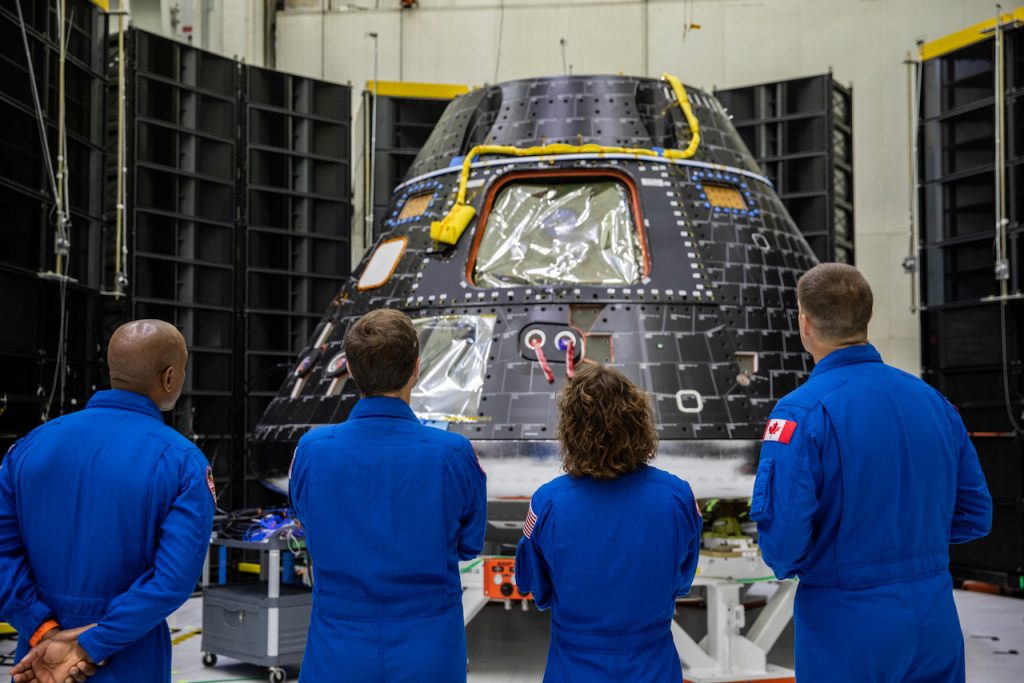
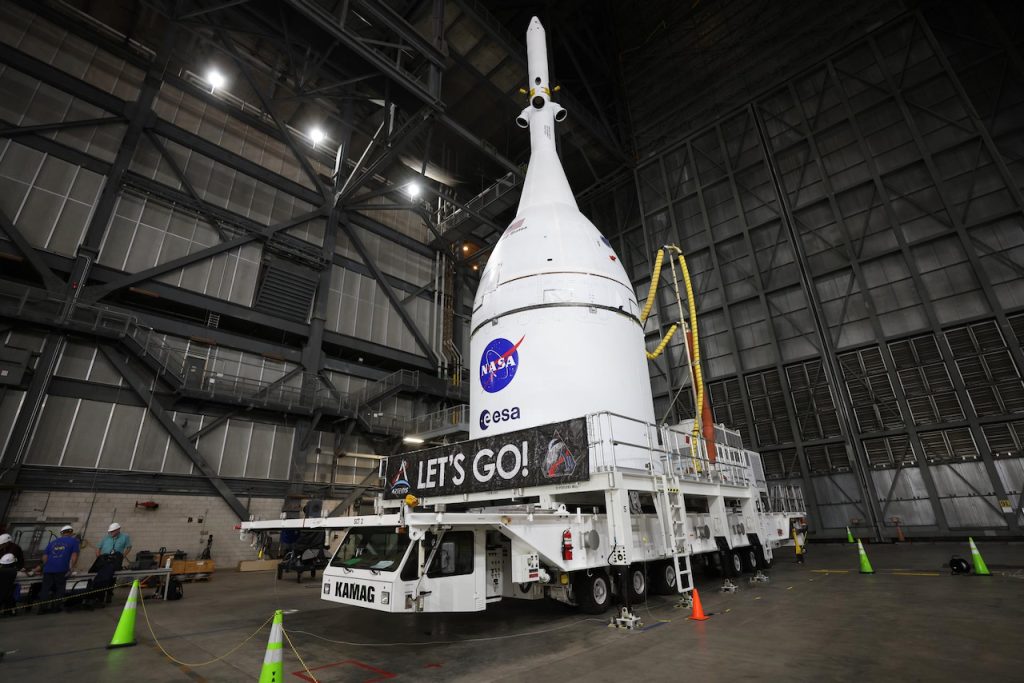
LEFT: Artemis II crew members check out their Orion crew module on Aug. 8, 2023. (Photo by NASA/Kim Shiflett). RIGHT: Technicians prepare to attach the Orion spacecraft on top of the Space Launch System rocket at NASA鈥檚 Kennedy Space Center in Florida on Oct. 17, 2025, for the agency鈥檚 Artemis II mission. (Photo by NASA/Amber Jean Notvest)
Inspiring the next generation
As interest in space exploration has grown, Goertzen has enjoyed sharing a behind-the-scenes perspective on the mission and spacecraft.
鈥淚鈥檝e worked on a lot of different parts of the spacecraft, but a lot of it is hidden,鈥� he said. 鈥淚t鈥檚 structural. It鈥檚 on the inside. But once you start seeing those pieces on the NASA broadcast, that really brought me a lot of joy, knowing I was a part of that.鈥�
His work has even made its way into the church he attends, where Artemis II was the focus of the children鈥檚 story for two consecutive Sundays.
鈥淜ids get so excited about it,鈥� Goertzen said. 鈥淢y nephew, who鈥檚 four, was so excited watching the launch that he had his eyes just pinned to the TV. Hearing stories like that really makes a difference in understanding that you are influencing people and kids and getting them excited about engineering and math and science.鈥�

Finding his place at 黑料正能量
Goertzen grew up in Goessel, a small town in south-central Kansas. 鈥淚t鈥檚 the quintessential Mennonite town,鈥� he said. 鈥淭here are three Mennonite churches and only about 1,500 people who live in the community.鈥� His father, Kevin, was a Mennonite pastor and serves as conference minister for Virginia Mennonite Conference.
When he was deciding where to attend college, he knew he wanted to enroll somewhere far enough from home to make a new path for himself. 鈥淚 was also looking for a good Christian university that would back up the morals and ideologies I had,鈥� Goertzen said. 鈥満诹险芰� stood out to me as a place where I felt at home. I liked the atmosphere of 黑料正能量, and my sister, [Jessica 鈥�14], was already a student, so that was a nice connection.鈥�
“I was also looking for a good Christian university that would back up the morals and ideologies I had. 黑料正能量 stood out to me as a place where I felt at home.”
Stephan Goertzen 鈥�16
While at 黑料正能量, Goertzen traveled to Guatemala and Mexico with leader Byron Peachey to fulfill his intercultural learning requirement. He described the program as 鈥渙ne of the best things about 黑料正能量.鈥�
鈥淭here are other schools that offer semesters abroad, but their students might live in dorms and you just don鈥檛 get the cultural aspect like you do when you鈥檙e living with a host family, without any of your classmates, and are made to speak another language,鈥� he said. 鈥淚t鈥檚 a huge opportunity to grow in who you are.鈥�
More than a decade after graduating, Goertzen still maintains the friendships and connections he formed with classmates and professors. 鈥淭he people have always been my favorite part about 黑料正能量,鈥� he said. 鈥淵ou can get a good education at a lot of different schools, but getting a good education from people who care about you makes a huge difference. Those people make a positive difference in your life beyond what they teach you.鈥�
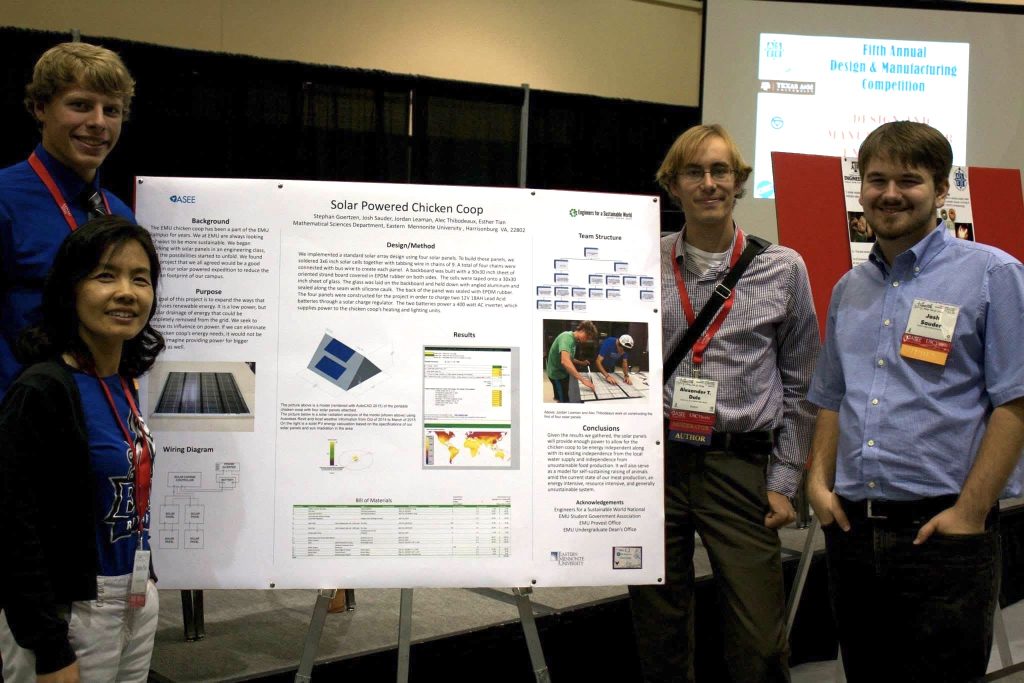
A balancing act
After graduating from 黑料正能量, Goertzen continued his education at Colorado School of Mines, where he earned a master鈥檚 degree in mechanical engineering with a concentration in robotics in 2018. He landed a job working on Orion through connections he made in the school鈥檚 space resources program. On Aug. 31, he joined Jeff Bezos鈥� Blue Origin as a senior structural analyst.
鈥淚f I were to tell my five-year-old self that I鈥檓 designing rockets to go into space, I think he would鈥檝e been ecstatic and been like, 鈥楳an, you made it,鈥欌�� Goertzen said.
Goertzen described his work as a balancing act. While he appreciates his employer鈥檚 contributions to science and technology, he also questions whether space exploration is the best use of the Earth鈥檚 resources.
鈥淚t鈥檚 hard to put the impact of exciting people about STEM industries into an impact assessment,鈥� he said. 鈥淗ow many kids are now going to want to go off and do science and exploration-type careers and be the next people who solve medical mysteries because they saw Artemis and thought, 鈥業 want to work in STEM?鈥� You can鈥檛 put a price on that.鈥�
In addition to his work on Orion, Goertzen served as project lead for an Engineers Without Borders clean water project that provided access to clean drinking water for a small community in Nicaragua. 鈥淚 have a passion for reducing pollution and providing for those who are less fortunate,鈥� he said.
Note: Goertzen’s former employer has been withheld for security reasons.
Join the Discussion on “For this 黑料正能量 alumnus, it really is rocket science”