
鈥淒iversify鈥� is a one of four key goals of 黑料正能量鈥檚 strategic plan and a committee on diversity and inclusion plays a key role in campus life and decision making. However, the broader culture, country and our small community have much work to do to welcome all. This timeline shows the painful realities of exclusion that is part of the 黑料正能量 story. We celebrate change, and acknowledge that we fall short.
***
1864&苍产蝉辫;鈥� Virginia Mennonite Conference (VMC) dictates that Mennonites cannot own or trade slaves, and sets restrictions for receiving slave labor.
1917&苍产蝉辫;鈥� Eastern Mennonite School (EMS) is established.
1920&苍产蝉辫;鈥�&苍产蝉辫;VMC debates allowing Black people in their churches. They are allowed with caution.
1925&苍产蝉辫;鈥�&苍产蝉辫;Two 鈥渕ulatto鈥� girls are accepted as members of Peake Mennonite Church after a year of deliberation.
1925&苍产蝉辫;鈥�&苍产蝉辫;VMC disapproves of marriages and close friendships between races.
1930s&苍产蝉辫;鈥�&苍产蝉辫;EMS student Thelma McConnell (white) begins visiting the Black neighborhood of Newtown in Harrisonburg.
1935&苍产蝉辫;鈥� The EMS Young People鈥檚 Christian Association (YPCA) in local Black homes, led by Thelma McConnell.
1934 鈥�&苍产蝉辫;Ernest Swartzendruber (white) (received BS in 鈥�64).
4/1936&苍产蝉辫;鈥� YPCA cottage prayer meetings to rent a building for mission church services. a vacant storefront at the corner of Gay and Federal Streets, and hold Sunday school in the morning for whites, and afternoon for blacks. Ernest Swartzendruber becomes the superintendent. The community objects to Black and white services being held in the same building. Rowena Lark (Black) helps lead a summer Bible school.
10/1936&苍产蝉辫;鈥�&苍产蝉辫; into two buildings, black in the original building and white on Chicago Ave. Ernest Swartzendruber remains superintendent of the Black mission.
1938 鈥�&苍产蝉辫;The mission board is uneasy reaching out to Black adults instead of just children. They consider closing down the Black mission. Ernest invites EMS professor Ernest E. Gehman to host evangelist meetings. Rowena makes waves by singing expressively, preaching during the children鈥檚 service, and being close friends with Ernest鈥檚 wife Fannie. In the next few years Rowena leaves for Chicago, where she is better received by white Mennonites.
1940&苍产蝉辫;鈥� Four Black adults ask to be baptized into the mission church. They are baptized in December.
1940 鈥�&苍产蝉辫;Thomas Stewart at EMS, and is told he will have to do so by correspondence because of 鈥渙pposition likely to arise between the attitudes of the northern and southern students,鈥� and because the state had ruled against integrated public schooling.
1941&苍产蝉辫;鈥�&苍产蝉辫;VMC and the Mission board put together rules about Black and white integration at church. It is opposed by many mission members, including Ernest and Fannie.
1942&苍产蝉辫;鈥�&苍产蝉辫;VMC gives funding for a permanent building, Broad Street Mission.
1943&苍产蝉辫;鈥�&苍产蝉辫; the first Black Harrisonburg resident to become Mennonite (at Broad Street Mission). Notice is given on March 10: 鈥淟ast Sunday in our communion service one more was added to the number of members here. Pray for this lady, Mrs Webb, that she may re卢main faithful to her promise and bring her daughters to her Saviour.鈥� She begins pressuring EMS to enroll her three daughters.
In a Sept. 13 service at 鈥淕ay Street Mennonite Mission for the Colored,鈥� Students Lester Eshleman and George R. Brunk contributed to the main part of the service. The following description also appears: Sister Webb, a recent convert, led the closing song 鈥淪teal away to Jesus,鈥� and she knew how to do it.
1943&苍产蝉辫;鈥� Fed up with the mission鈥檚 racial attitudes, Fannie Swartzendruber storms out of a segregated communion service, and begins walking the four miles home with daughter. A few months later, she and Ernest are removed from their positions by the Mission Board.
1944聽鈥� EMS student聽Margaret Derstine recounts聽tension on campus about Black students. One poster circulates, depicting the president blessing a graduate off to be a missionary in Africa, while the dean holds the back door closed to Black applicant.聽
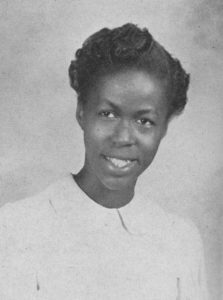
1945 鈥� Margaret 鈥淧eggy鈥� Webb, Roberta鈥檚 daughter, applies to EMS. The administration suggests she go to Hesston, which she does.
That same year, the May 2 Weather Vane reports in 鈥淭abulated Tidbits,鈥� that 鈥淎t the request of the Webb sisters, Ralph Shenk with a girls鈥� quartet went to the colored school to regive his sermon on 鈥楶erennial Romance.鈥� The group enjoyed a dinner at the school cafeteria.鈥�
1945&苍产蝉辫;鈥� Faced with Black applicants, in their minutes, 鈥渨e feel that at this time it would be unwise to admit such students into the co-educational institution. However we express our heartfelt sympathies for our colored brethren and sisters with their education problems and are ready to open up such measures of opportunity for them as such opportunities are expedient and possible.鈥�
1945 鈥�&苍产蝉辫;TheEMS President鈥檚 daughter the Lucy Simms School for a mixed-audience D.C. gospel choir performance.
1946&苍产蝉辫;鈥� Rowena Lark鈥檚 husband James becomes the first Black person ordained in the Mennonite church.
1946&苍产蝉辫;鈥� EMS accepts its first non-white students,
1947 Ada Webb, daughter of Roberta, applies and is denied. She attends night classes at Roosevelt College in Chicago.
1948&苍产蝉辫;鈥�&苍产蝉辫; the decision on admitting Black students to the VMC. VMC refers back to EMS to make its own decision.
1948听鈥撀�. He, along with the other five Black students first enrolled at EMC聽do not finish their degrees聽due to social, financial and academic obstacles.

1949听鈥撀�Ada Webb (Roberta鈥檚 daughter) is accepted聽at EMC鈥檚 junior college as the first full-time Black student. According to a letter from classmate Abram Hostetter to Jay B. Landis, she had to sit in back of chapel alone, while everyone else was arranged by alphabet. Nobody would walk with her, so Hostetter started accompanying her across campus.
She transfers to Hesston College, and later graduates from La Junta School of Nursing (La Junta, Co.) in 1955.
1950 鈥撀�聽Black student to stay in the EMC dorm. She leaves after one semester.
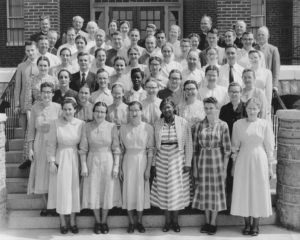
1952&苍产蝉辫;鈥�&苍产蝉辫;Peggy Webb Howard is admitted to EMC after being personally invited back by President John R. Mumaw.
1952 鈥�&苍产蝉辫; by a Black friend from an African mission; a restaurant downtown refuses to serve them together in the main dining room.
1953&苍产蝉辫;鈥� White student an oratorical contest with an essay advocating for racial equality.
April 1954&苍产蝉辫;鈥�&苍产蝉辫;Peggy Webb Howard is the first Black student to graduate from EMC. She and Jay B. Landis co-wrote and led their commencement song. She did not wear a head covering to the ceremony. Howard earned a BS in music, social science, and secondary education, and was a member of the Zelathean and Mennonite Historical clubs.
May 1954聽鈥� The Supreme Court case Brown v. Board of Education rules segregation in schools unconstitutional.
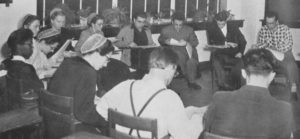
1954聽鈥� EMC sociology student聽Aubrey Shenk goes聽to Zion Mennonite聽Church in Broadway to record聽reactions to EMC鈥檚 desegregation policies. She receives varied responses. One EMC grad there, a young businessman, is all for integration. The pastor discourages them, and mentions that the 鈥淵ankee鈥� teachers at EMHS were his first introduction to the Gettysburg address.
1955&苍产蝉辫;鈥�&苍产蝉辫;VMC lifts strictures on integrated worship.
1957 鈥� In the Jan-Feb issue of Broad Street Mennonite Church鈥檚 Missionary Light, Paul Peachey commends BSMC for 鈥渋ts stand in desegregation ahead of the times.鈥�
1958 鈥�&苍产蝉辫;

1959&苍产蝉辫;鈥揟丑别&苍产蝉辫;Richmond Times Dispatch runs a story on six Virginia colleges accepting Black students, and notes that EMC was the first.
1960&苍产蝉辫;鈥�&苍产蝉辫;Vincent Harding and wife Rosemarie Freeney (the first Black Goshen College graduate) accept positions with Mennonite Central Committee to open the integrated Peace House in Atlanta.
1962 鈥�&苍产蝉辫;Vincent and Rosemarie Harding first visit campus, and challenge Mennonites to advocate for racial equality. They feel that Harrisonburg Mennonites are unaware of and insensitive towards inequality. They find out a Mennonite hotel owner turned away the Black parents of an EMC student.
1962&苍产蝉辫;鈥�EMC鈥檚 radio program The Mennonite Hour pushes a racial equality agenda, and gets community pushback.
1962&苍产蝉辫;鈥�EMC and EMHS play basketball games against the Black students of Lucy Simms High School.
1962 鈥�&苍产蝉辫;D.C. native Grandison Hill begins classes at EMC (one of four Black students that year) in August. He encounters both a sense of community and racism, and transfers out after one year.
1963 鈥撀�The Hardings visit Harrisonburg again, and go聽to EMC and Broad Street Church.聽Professors John Lapp and Samuel Horst, inspired by their visit,聽form the committee largely responsible for the desegregation of Harrisonburg schools and hotels.聽

1963&苍产蝉辫;鈥�&苍产蝉辫;The Hardings meet with EMC graduate Titus Bender (white) in Missisippi, where he shocks the couple by publicly embracing them.
Martin Luther King, Jr. gives the 鈥淚 Have A Dream鈥� speech in August on the National Mall.
1966&苍产蝉辫;鈥� Student Lee Roy Berry becomes the first Black student on stage: the reported that he 鈥渃aptured the psychological struggle of Othello鈥� in his performance put on by the Promethian Literary Society. [He went on to be a celebrated bilingual attorney in Goshen, Indiana, and a professor of political science at Goshen College.]1971 鈥� The YPCA continues outreach to the African American community in Newtown.
1980-85 鈥�&苍产蝉辫;Abraham Davis becomes the first director of the Cross-Cultural Center, precursor to Multicultural and International Student Services.
1986 鈥撀�Eric Payne MA 鈥�16聽first enrolls at 黑料正能量, and feels isolated and alienated. He helps form the precursor to the Black Student Union (BSU). Payne leaves聽黑料正能量 in 1987.

1997听鈥撀犅爐o speak in classes and at a Coming Together service in the Discipleship Center.
1997 鈥�&苍产蝉辫; (who would later become Director of Multicultural Services and a professor) graduates as one of 70 American students of color from 黑料正能量.
2005&苍产蝉辫;鈥�&苍产蝉辫; a BSU reunion; 25 alumni attend.
2006 鈥�&苍产蝉辫;The graduating class includes .
2011&苍产蝉辫;鈥�&苍产蝉辫;Professor Mark Sawin leads a chapel about desegregation; Jay Landis and other classmates of Peggy Webb Howard Christopher attend.
2014 鈥�&苍产蝉辫;Vincent Harding visits campus to give the Albert Keim History Lecture 鈥淚s America Possible?,鈥� and presents in undergraduate and seminary chapels.
2016 鈥� The Black Student Union organizes a Town Hall on Race, with other activities during Black History Month.
2016 鈥�&苍产蝉辫;黑料正能量 hosts the national gathering of Coming to the Table.
2016&苍产蝉辫;鈥� A faculty/staff conference meets on 鈥淓mbracing Diversity.鈥�
2017&苍产蝉辫;鈥� BSU hosts a second Town Hall on Race, with more diverse participation.
2017&苍产蝉辫;鈥揟丑别&苍产蝉辫;Donning of the Kente ceremony, in its second year, honors accomplishments of students of color.