
鈥淭his program聽is for any 黑料正能量 student,鈥� says former WCSC associate director Doug Hertzler 鈥�88. 鈥淵ou can position yourself to do anything you want after college through this program.鈥�
Hertzler himself is a case in point: he interned with Washington Inner City Self-Help while a student in the then-named WSSY program during the 1986-87 school year, went into anthropology, and wound back up as professor at now-named WCSC. (Hertzler moved into a new job with Action Aid International in November聽2012.) Numerous alumni of the WSSY/WCSC program continue to draw directly from their internship experience in their jobs today, scattered across a wide variety of career fields. Some examples:
Pharmaceuticals
鈥淎 lot of the things I learned during my WSSY year really played into what I鈥檝e done,鈥� said Fikir Tilahun 鈥�00 Sanders, most recently employed in corporate social responsibility for a large pharmaceutical company. During her year in Washington, Sanders was an intern with Bread for the City, a nonprofit that provided healthcare, legal assistance and other support to low-income and homeless people. Sanders worked in the organization鈥檚 clinic and helped clients fill out paperwork to enroll in various 鈥減atient assistance programs,鈥� through which many drug companies provide free medication to people in financial need.
Sanders found herself working on the same issue from a very different angle: the redesign of her own company鈥檚 patient-assistance program.
鈥淭he regulation has changed since I was doing it [in Washington], but it was interesting to work on the other side of it,鈥� she said, noting that her experience helping patients enroll in programs like the one she鈥檚 redesigned played a role in the decisions she made.
Journalism

As an intern in the interview production department of the Al Jazeera English network, Samantha Cole 鈥�11 lined up experts on various topics to speak on-air to the station鈥檚 anchors during her semester in the WCSC program.
The spring of 2011 was a momentous time to be at the network. As the events of the Arab Spring unfolded, the routine rush of 鈥渁nswering three phones at once would pause, to watch what was happening on our own coverage: our reporters being beaten by police, satellite trucks burning, revolutionaries waving banners with the Al Jazeera logo. It was surreal to be on the other side of the camera, helping give voice to the long unheard,鈥� she said.
Soon after her semester in Washington ended, Cole began working as a features writer for the Daily News-Record back on 黑料正能量鈥檚 home turf in Harrisonburg.
鈥淢y internship definitely played a part in sticking with journalism. I learned the importance of thorough, careful retelling of stories. Sources aren鈥檛 just soundbites, but people who trust the journalist with the most precious thing they own: their story,鈥� she said.
Natural Resource Management
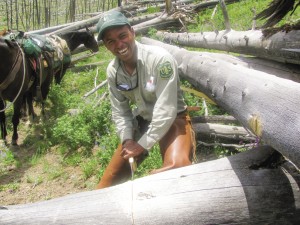
Working for the U.S. Forest Service in its International Programs office, Justin Hawkins 鈥�06 had an opportunity to learn more about the behind-the-scenes workings of the agency he still works for. Now based in Cody, Wyoming, as a supervisory recreation technician for the Shoshone National Forest, Hawkins manages eight campgrounds and other recreational facilities near Yellowstone National Park that serve 100,000 to 200,000 visitors each year. While his work in the field now bears little similarity to his day-to-day tasks as an intern, the experience gave him broader understanding of the Forest Service as well as a 鈥渇oot in the door鈥� that helped him land the job in Wyoming after graduating from 黑料正能量.
Digital Media
Mark Fenton 鈥�10 sees a clear line from his internship with Bread for the World to his job as a media specialist with a marketing agency in Harrisonburg. At Bread for the World, Fenton worked in a variety of digital media to support the organization鈥檚 marketing and communications efforts. Focusing primarily on photography, Fenton helped the organization develop a photography database. His pictures appeared in numerous Bread for the World publications. In his current job, he works on a variety of projects that include email marketing, web strategy and video production for his agency鈥檚 clients.
鈥淭he internship helped me step into the working world,鈥� Fenton said. 鈥淚t gave me experience in a real work setting, with demands and deadlines . . . . It helped push me to become more persistent, hard-working and confident.鈥�
Physical Therapy
Entering her WSSY experience in 1988, Amy Smith 鈥�90 Mumbauer was trying to decide whether she wanted to pursue graduate study in medicine or physical therapy. Her internship, assisting a physical therapist at an Easter Seals preschool in Washington, made the choice an easy one.
鈥淢rs. Horowitz [her supervisor] taught me how to provide hands-on care for children with disabilities,鈥� said Mumbauer, who went on to graduate school in physical therapy and has spent much of the past 20 years working in adult rehabilitation and orthopedics. 鈥淭he handling skills that I learned in my internship with the children have been useful to me in many settings. . . . Communicating with patients and families, as I watched Mrs. Horowitz do, is a skill that I use daily.鈥�
Guidance Counseling/Coaching
It was at Archbishop John Carroll Catholic High School in Washington, D.C. where Dwight Gingerich 鈥�81 first discovered the similarities between counseling and coaching. Splitting his internship between the guidance office and assisting the varsity basketball team during the school鈥檚 run to the city basketball championship game, Gingerich learned that effective listening and benevolence are characteristics equally important to counselors and coaches. Now a guidance counselor, athletic director and head boys basketball coach at Iowa Mennonite School, Gingerich said that lessons he learned in Washington remain as relevant in rural Iowa as they were more than three decades ago in the inner city.
Information Technology
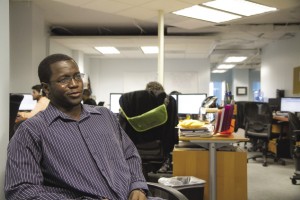
Francis Johnson 鈥�07 enjoys an extremely close connection between his internship through WCSC and his job today as an IT engineer in Washington D.C. 鈥� he was hired on at 501cTECH full-time a week after his internship there ended. The nonprofit organization, formerly known as NPower Greater DC Region, provides IT support and services to other nonprofits across the D.C. metro area.
Johnson entered WCSC for his final semester of college knowing the internship would provide him with real-world experience, and he hoped, lead to post-college job opportunities. Getting hired directly by his internship, he said, was a best-case scenario.
鈥淭hat鈥檚 what I hoped would happen with the WCSC program,鈥� said Johnson, a senior 501cTECH engineer, who works with clients on technical support, network maintenance, assessments and other projects.
Learning how to live and interact with a large group of fellow students, plus taking classes at Howard University, made his experience in D.C. worth it for more than the job he landed.
鈥淚 benefitted in many ways,鈥� Johnson said. 鈥淚鈥檇 do it again 鈥� not just because of the great job opportunity, but because of the other unique experiences that came with it.鈥� 鈥� Andrew Jenner ’04