
A century or more ago, 鈥渋nsurance鈥� was something of a bad word for Mennonites. Buying an insurance policy implied value on worldly treasure and represented departure from the traditional practice of 鈥渕utual aid,鈥� by which the church used its pooled resources to rebuild and restore losses suffered by individual members through accident or other misfortune.
Attitudes and circumstances began changing in the church, though, around the middle of the twentieth century, according to Herman Bontrager 鈥�72, the president and CEO of Goodville Mutual Casualty Company in New Holland, Pennsylvania. Several factors were at play. American society was becoming more litigious (a lament with continuing relevance), and while church-based mutual aid could replace a member鈥檚 car after an accident, settling a liability to an outside party could become very expensive very quickly.
Growing income disparity between church members also presented challenges to the mutual aid model. As some members grew wealthier, their desire not to burden others with the prospect of insuring (through mutual aid) expensive assets, or even a lack of confidence that the church would be able to do so,聽provided further incentive to purchase underwritten, commercial insurance.
(Underwriting 鈥� essentially, an assessment of risk 鈥撀爄s a key difference between insurance and mutual aid. Under the mainstream insurance model, the underwriting process is used to set premium prices or even to reject coverage entirely. Mutual aid plans extend coverage to all members of a specified group 鈥� members of any church in a certain Mennonite conference, for example 鈥� without this same risk assessment process.)
The shift didn鈥檛 happen overnight. Goodville Mutual was founded by Mennonites in 1926, at a time when the church still held a generally skeptical view of insurance. Goodville had no formal affiliation with the church, operating from the start as a licensed, regulated insurance company offering underwritten policies to the general public. Over several decades, it began to expand from Pennsylvania to other states, often at the invitation of small, Mennonite-run mutual aid plans that wanted to add Goodville鈥檚 personal liability insurance to the property coverage they offered for homes, farms and businesses. They also wanted to offer Goodville鈥檚 auto insurance to their members, Bontrager told Crossroads.
By the 1950s, the idea of commercial insurance had gained wide enough acceptance within the Mennonite church that Mennonite-owned insurance brokerages began to appear. In 1952, a man named Emory Layman began selling Goodville home and auto policies in Harrisonburg, Virginia, through his Layman Insurance Agency. Ralph Weaver, class of 鈥�53, founded a similar company 鈥撀燱eaver Insurance 鈥撀爄n Waynesboro, Virginia, in 1958. And in Berlin, Ohio, Paul Hummel founded the Hummel Insurance Agency in 1957.
Changing times and mindsets led to the establishment of these businesses by members of a church that once looked on the entire insurance industry with suspicion. Continuing change in society and markets means that each of them now offers a far wider range of products and services than they did at the beginning. At the same time, they still maintain close ties to the church in general, and to 黑料正能量 in particular, as multiple graduates work in management and other areas of each of these companies.
鈥淥ne of the things we really try to emphasize is 鈥楧o the right thing for the client,鈥欌�� said Stephen Cavanaugh 鈥�93, the general manager of LD&B Insurance and Financial Services in Harrisonburg, Virginia.
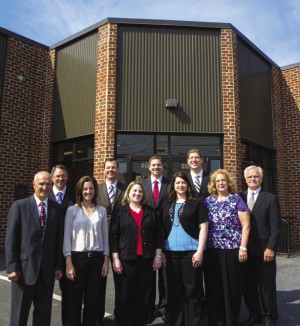
(LD&B 鈥� Layman, Diener & Borntrager 鈥撀爄s the corporate descendant of Layman Insurance Agency, which merged in 1992 with an insurance agency owned by Eugene Diener 鈥�68 and Jonas Borntrager 鈥�70. Today, LD&B is employee-owned.)
Building strong relationships with clients, Cavanaugh said, is certainly good business practice. But it鈥檚 also done in the service of LD&B鈥檚 goals to build and support community in the areas where it works. The company makes a practice of giving a fixed percentage of its gross revenues (not profits) to community organizations and gives its nearly 70 employees a free day each year to volunteer at a non-profit agency of their choice, along with $500 to support it. While LD&B 鈥渋sn鈥檛 a Mennonite company,鈥� said Diener, who serves as president, its values reflect those of the church, and were shaped by his and other alumni employees鈥� experiences at 黑料正能量.
鈥淎t 黑料正能量, I began to realize life is all about relationships,鈥� said Adam Savanick 鈥�06, an LD&B financial advisor. 鈥淚鈥檓 thankful for the opportunity to work for a firm that is committed to serving and improving the local community.鈥�
Savanick鈥檚 job title, financial advisor, indicates one of the ways that these agencies have evolved over the years 鈥� offering financial planning services and investment products in addition to insurance policies. While LD&B has offered financial planning to some degree for years, Cavanaugh said, it has become a special focus of the company since he was hired two years ago. Because insurance and financial planning are so closely related (insurance protects assets, financial planning builds them), this diversification made sense for many companies like LD&B.
In Ohio, the Hummel Insurance Agency is now known as the Hummel Group, and financial services has become a large and important part of its business, said principal Barry Hummel 鈥�74, son of the company鈥檚 founder. The same is the case at the company now known as Weaver Insurance and Financial Advisors, which began offering financial services in the late 鈥�90s, said Chad Hatter 鈥�97.
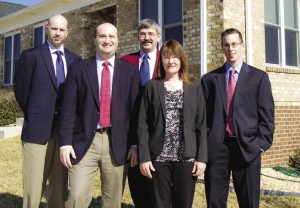
Janna Zirkle ’75, Chad Hatter ’97
鈥淥ne thing that my education at 黑料正能量 deeply instilled in me was the value of considering the long-term perspective,鈥� said Joe Shenk 鈥�02, a finance and investment adviser at Weaver. 鈥淸That鈥檚] challenging to keep in mind, but if you let it guide your investment decisions, history shows that you will have better outcomes.鈥�
Shenk also said that one of the things he values about working at Weaver is that it is an independent brokerage (as are LD&B and the Hummel Group) that doesn鈥檛 鈥減romote proprietary products at the expense of what is good for clients.鈥�
In something of an ironic twist when you take the long view, churches are also among these companies鈥� clients. At Weaver, Janna Zirkle 鈥�75 specializes in selling property, liability, workers鈥� compensation and auto policies to congregations, as well as travel policies for church-sponsored trips abroad.
鈥淪ituations can and do arise that have the potential for devastating results,鈥� said Zirkle. 鈥淢aking church leaders aware of the possible risks 鈥� and providing suggestions to help minimize [them] is what I enjoy most.鈥�
Changing times have also prompted Goodville to diversify its product offerings. (As an insurance company, Goodville actually develops policies, sets premiums and pays out claims; the other businesses mentioned in this article are brokerages that sell policies from various insurance companies, including Goodville.) In the 鈥�90s, Bontrager said, it began packaging home and auto policies together to offer more competitive rates to customers 鈥撀燼n innovation in the industry that鈥檚 aggressively marketed by larger insurance companies.
鈥淚t鈥檚 all about statistics and probability,鈥� Bontrager said.
The more that risks are spread out, between different policy holders and different insurance coverages, the smaller the burden placed on each member. And the bigger an insurance company is, the more it can withstand volatility and unpredictability in the claims it will pay out (an example: the 鈥渄erecho鈥� storm in June 2012 became the single biggest loss event in Goodville history).
Today, commercial insurance has almost entirely replaced mutual aid (as defined in its purest sense) as the way that members of the Mennonite church protect their homes, cars and bank accounts against disaster. Along the way, new companies with ties to the church and 黑料正能量 have sprung up, flourished and broadened in scope.
Still, Bontrager said, the lend-a-hand motivation behind mutual aid still thrives in a non-commercial way in Mennonite communities.
鈥淭he way we practice mutual aid has two facets: one is helping people in the community who fall into hard times. The second way it is to extend unconditional aid to people who might not be members of our church, who are in need,鈥� Bontrager said. 鈥淭hat commitment is very much alive and well in our churches.鈥澛� 鈥� Andrew Jenner听’04